Celebrating More Than 60 Years of Movie Cars and Automotive History
Every October 5, movie fans around the world celebrate Global James Bond Day, marking more than six decades of one of cinema’s most recognizable franchises.
The date goes all the way back to October 5, 1962, when Dr. No held its world premiere at the London Pavilion in London. The film introduced movie audiences to Sean Connery as James Bond and established many of the elements that would become inseparable from the series: international locations, memorable villains, cutting-edge technology, distinctive style and, of course, incredible vehicles.
More than 60 years later, those vehicles have become stars in their own right.
From elegant grand tourers and rare Japanese sports cars to motorcycles, boats, aircraft and a sports car transformed into a submarine, the world of James Bond has created a unique intersection between movie and automotive history.
For Global James Bond Day, we’re looking back at how it all began, how cars became such an important part of the films and some of the machines that helped define James Bond on the big screen.
It All Started With Dr. No
Before the gadgets, elaborate chase sequences and famous movie cars, there was Dr. No.
Producers Albert R. “Cubby” Broccoli and Harry Saltzman brought Ian Fleming’s novels to the screen with a production budget of approximately $1 million. Filming began in Jamaica in January 1962 before moving to Pinewood Studios in England.
When Dr. No premiered in London on October 5, 1962, audiences were introduced to a character and cinematic world that would ultimately become part of pop-culture history.
Many of the ingredients associated with James Bond were already there.
The famous theme appeared. Maurice Binder created the opening title sequence. Production designer Ken Adam began establishing the striking visual language of the films. Exotic locations, action, style and technology all helped create something audiences hadn’t quite experienced before.
And automobiles were already part of the picture.
Among the vehicles appearing in Dr. No was a Sunbeam Alpine, driven through Jamaica by Bond. The movie also featured period vehicles including a Chevrolet Bel Air convertible, Ford Anglia, Chevrolet Impala and LaSalle hearse.
The Sunbeam may not have carried the elaborate equipment that would become associated with later Bond cars, but it helped establish a tradition that would continue for decades:
The vehicle could be part of the character.
How Cars Became Essential to James Bond
Cars in movies often serve a simple purpose: getting a character from one scene to another.
The James Bond films took a very different approach.
Over the decades, the vehicles became an extension of the world surrounding the character. They could communicate elegance, performance, technology or danger before a chase even began.
Sometimes the car was sophisticated. Sometimes it was outrageous. And sometimes it did something a car had absolutely no business doing. That combination proved irresistible.
The series has featured vehicles from manufacturers including Aston Martin, Lotus, Toyota, BMW, Jaguar, Ford and Rolls-Royce, alongside motorcycles, military vehicles, boats and aircraft.
For auto enthusiasts, watching the films can almost become a tour through different eras of automotive design.
The sharp lines of the 1960s give way to the wedge-shaped sports cars of the 1970s. Later films introduce increasingly advanced luxury and performance cars, while modern installments often look back at the vehicles that helped build the franchise’s identity.
Few movie franchises have maintained that relationship with the automobile for so long.
And no car demonstrates it better than the Aston Martin DB5.
The Aston Martin DB5 Changes the Movie Car Forever
If you asked movie fans to picture a James Bond car, there’s a good chance they’d imagine a Silver Birch Aston Martin DB5. Surprisingly, it wasn’t there from the beginning.
The DB5 made its franchise debut in 1964’s Goldfinger, and its appearance helped change expectations for what a movie car could be. The elegant British grand tourer was already desirable on its own. The film transformed it into something else entirely.
This wasn’t simply a beautiful car being driven by the hero. It was part automobile, part cinematic gadget.
The DB5 was presented with an assortment of modifications, including a smoke screen, oil slick system, rotating license plates, protective rear shield and one particularly memorable passenger-ejection system.
Suddenly, the audience wasn’t only waiting to see where the car would go. They were waiting to see what it would do next.
The DB5 returned in Thunderball and, decades later, made appearances in films including GoldenEye, Tomorrow Never Dies, Casino Royale, Skyfall, Spectre and No Time to Die.
Its longevity is remarkable. A sports car introduced to movie audiences in the 1960s has remained instantly recognizable to generations who weren’t even alive when Goldfinger premiered.
That’s more than product placement, that’s automotive iconography.
The Toyota 2000GT: A Rare Japanese Icon
Not every important James Bond vehicle came from Britain. One of the most fascinating examples arrived in 1967’s You Only Live Twice: the Toyota 2000GT.
Today, the 2000GT is recognized as one of the most significant early Japanese sports cars. With a 2.0-liter inline-six engine, five-speed gearbox and striking low-slung design, it represented an ambitious new direction for Toyota.
Only 351 examples were produced, making the car exceptionally rare. But the vehicles seen in the movie were even more unusual. Toyota didn’t sell a convertible 2000GT, so two cars were transformed into unique open-top models for filming. The work was completed in just two weeks.
One of those vehicles was eventually rediscovered in Hawaii in 1977, returned to Japan and restored. It is now preserved by the Toyota Automobile Museum. For collectors and automotive historians, the story is fascinating even without the movie connection. Add James Bond history, and it becomes one of the most distinctive cars associated with the franchise.
The Lotus Esprit That Went Underwater
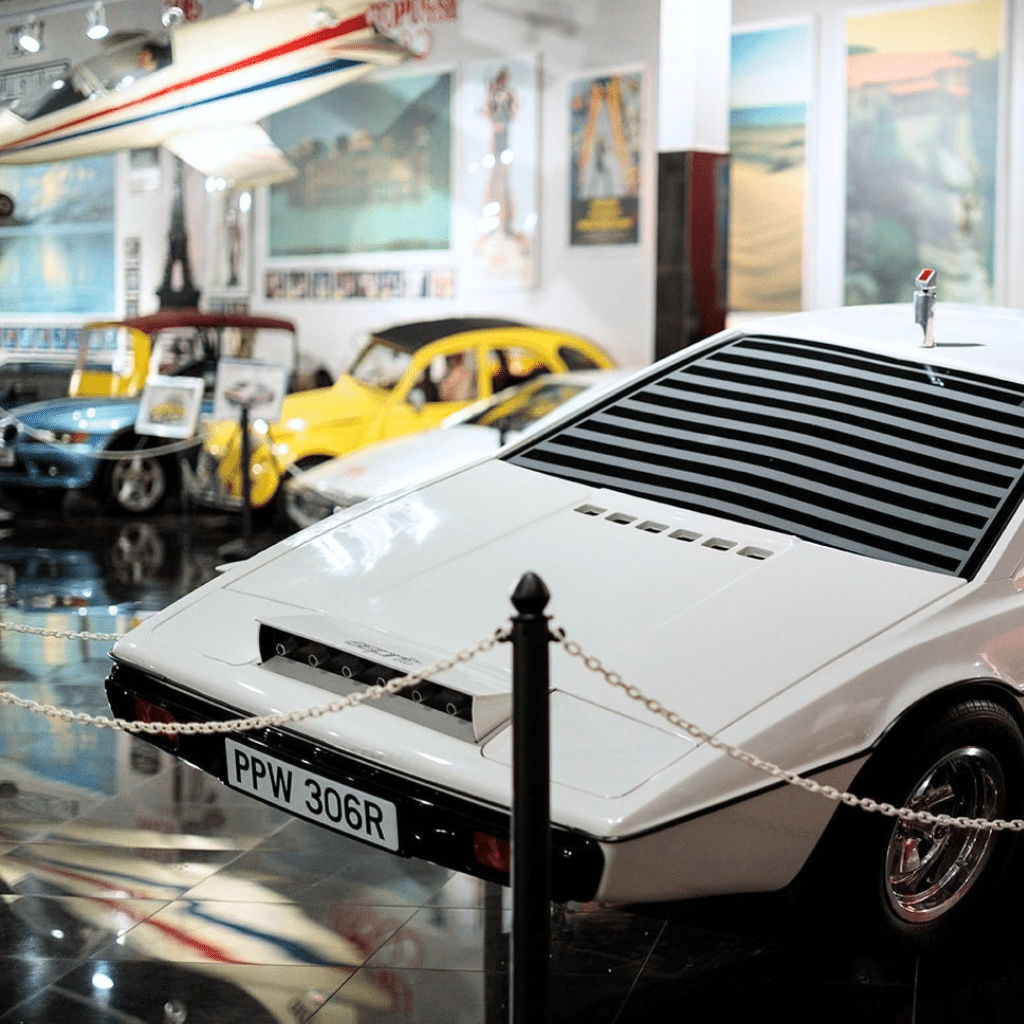
Then there is the car that refused to stay on the road. In 1977’s The Spy Who Loved Me, a Lotus Esprit became the centerpiece of one of the most memorable vehicle sequences in movie history.
The Esprit looked futuristic even before filmmakers started modifying it. Its wedge-shaped fiberglass body came from legendary automotive designer Giorgetto Giugiaro, and members of the production team recognized that its streamlined shape resembled something else entirely: A submarine.
During a chase, the Lotus enters the water and transforms into an underwater vehicle, complete with fins, rudders, propellers and an assortment of fictional defensive equipment.
The idea was pure cinematic fantasy, but the road-going Esprit behind it was very real. The early European model produced around 160 horsepower from its mid-mounted engine and could reach a claimed top speed of 138 mph.
It was another important step in the evolution of the James Bond vehicle. The DB5 established that the car could hide surprises. The Lotus demonstrated that filmmakers could take that idea almost anywhere, including underwater.
More Than Aston Martins
While Aston Martin has the strongest connection with James Bond, focusing on one manufacturer misses much of the fun.
BMW became particularly prominent during the 1990s, with vehicles including the Z3, 750iL and Z8 entering the franchise. The Aston Martin V8 brought a distinctly 1980s interpretation of British performance to The Living Daylights, while later films featured machines such as the V12 Vanquish, DBS, DB10 and modern Vantage.
Jaguar models have also played memorable roles, sometimes giving the opposition machinery every bit as interesting as Bond’s. Then there are the motorcycles, military vehicles, aircraft, boats, buses and unconventional automobiles used in action sequences around the world.
That’s part of what makes the automotive side of James Bond so interesting.
A collector might be fascinated by the rarity of the Toyota 2000GT. A design enthusiast can compare the radically different approaches of the DB5 and Lotus Esprit. A movie-car fan can focus on how production teams transformed real automobiles for the screen.
Taken together, the films have created a moving timeline of automotive culture.
Why the Cars Have Lasted as Long as the Movies
There’s a reason these vehicles continue to attract attention decades after their first appearances. They combine two things people naturally connect with: cars and stories.
A rare automobile already has a story. There is the company that designed it, the engineers who built it, the era that influenced it and the people who owned it. A movie adds another layer. Now the vehicle is connected to a character, location, scene and moment in popular culture.
A Silver Birch DB5 is no longer simply a beautiful 1960s British grand tourer. A white Toyota 2000GT isn’t simply an exceptionally rare Japanese sports car. A white Lotus Esprit isn’t merely a piece of Giorgetto Giugiaro’s automotive design history.
For millions of people, those silhouettes immediately recall scenes from the screen.
That’s why movie cars and screen-used vehicles occupy such an interesting place in automotive collecting. They sit at the intersection of engineering, design, entertainment and cultural history.
Why We Celebrate Global James Bond Day
Global James Bond Day was established in 2012, when the film franchise celebrated its 50th anniversary. Choosing October 5 brought the celebration back to the beginning: the 1962 world premiere of Dr. No.
Today, the day gives fans an opportunity to revisit favorite movies, debate their favorite actors, remember unforgettable villains and, naturally, argue about which vehicle deserves the title of greatest James Bond car.
For automotive enthusiasts, it’s also an opportunity to appreciate an unusual legacy. Think about how much the automobile changed between 1962 and today.
The earliest movies existed in an era of carburetors, chrome and analog instrumentation. Over the following decades came dramatic advances in performance, safety, aerodynamics, electronics and automotive technology.
The films changed alongside them. Yet they also developed a willingness to look backward. Modern appearances by classic vehicles such as the DB5 demonstrate that great automotive design can transcend the period in which it was created.
More than six decades after Dr. No, cars remain an essential part of the James Bond experience.
Experience Bond Automotive History in Orlando
You don’t have to travel to London to get closer to the automotive side of the films.
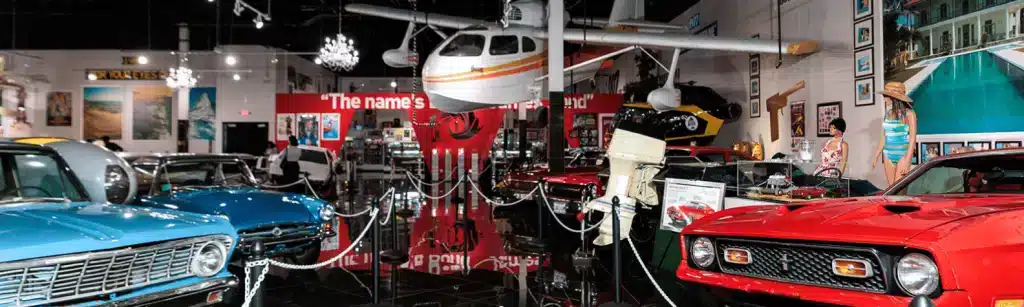
Inside the Orlando Auto Museum at Dezerland Park Orlando, visitors can explore a dedicated Bond exhibit featuring an extensive collection of vehicles and memorabilia connected to the legendary film series.
Admission to the Bond exhibit is included with an Orlando Auto Museum ticket.
Guests must purchase admission to the Orlando Auto Museum to enter the exhibit. Visiting Dezerland Park or dining at 007 Kitchen & Bar does not include admission to the museum or exhibit.
Dezerland Park itself does not require general admission to enter, so guests are welcome to visit the dining and entertainment areas separately before or after their museum experience.
Celebrate More Than 60 Years of James Bond at Dezerland Park
What started with Dr. No on October 5, 1962, became one of the longest-running and most recognizable film franchises in history. Along the way, its vehicles became part of the story.
The Aston Martin DB5 demonstrated that a movie car could become a cultural icon. The Toyota 2000GT introduced audiences around the world to an emerging era of Japanese performance. The Lotus Esprit turned radical 1970s design into unforgettable movie spectacle. And dozens of other cars, motorcycles, boats and aircraft have helped keep audiences wondering what incredible machine might appear next. That’s part of the fun of Global James Bond Day.
It’s an opportunity to celebrate the movies, but it’s also an opportunity to appreciate the designers, engineers, stunt teams, filmmakers and automobiles that helped bring that world to life.
And for those who would rather see automotive history in person than simply rewatch it on a screen, the celebration can continue at the Orlando Auto Museum and Dezerland Park Orlando.
This October 5, revisit a favorite film, remember your favorite chase and take another look at the machines that helped make James Bond an automotive icon.